
If you are thinking about upper eyelid surgery, it is natural to start by focusing on how your eyes look. Many people notice changes in their eyelids over time, or feel that their eyelids do not reflect how alert or comfortable they feel. At the same time, it can be difficult to know what upper eyelid surgery actually involves, what it can address, and what questions are worth asking early on.
In Singapore, where people have a wide range of eyelid structures and facial features, conversations about eyelid surgery often go beyond appearance alone. Eyelids play an important role in eye function, comfort, and daily use. Understanding these roles can help you make better sense of whether eyelid surgery is something you want to explore further.
This article is for those who are considering eyelid surgery and want a clearer picture of what is usually discussed, including aesthetic, functional, and anatomical considerations.
What Is Eyelid Surgery, and What Does It Focus On?
Eyelid surgery refers to procedures that alter the structure of the eyelids. When people talk about double eyelid surgery, they are usually referring to surgery on the upper eyelids, where a crease may be created, adjusted, or refined.
Rather than being a single technique, eyelid surgery involves working with several layers of tissue:
- Skin
- The muscles that open and close the upper eyelid
- Fat beneath the skin
- Connective tissue that helps form the upper eyelid fold
How these layers are arranged differs from person to person. In Singapore, it is common to see a wide range of eyelid anatomies, including low creases, multiple folds, asymmetry between the eyes, or eyelids that change noticeably when opening and closing.
Looking Beyond Appearance: Why Eyelids Matter Functionally
Eyelids are not only about how the eyes look. They have an important functional role in protecting the eye, spreading tears, and allowing comfortable blinking throughout the day.
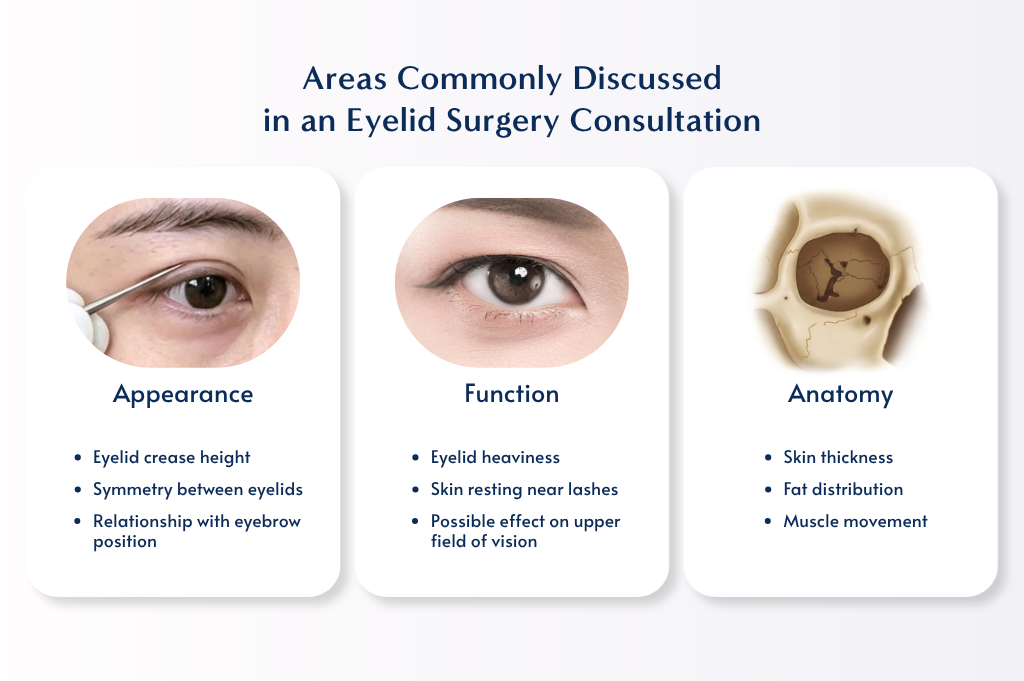
Some people considering eyelid surgery notice functional concerns such as:
- A feeling of heaviness around the upper eyelids
- Skin resting on or near the eyelashes
- Needing to raise the eyebrows to keep the eyes feeling open
- Tiredness around the eyes later in the day
In certain situations, excess upper eyelid skin or a low eyelid position may also affect the upper field of vision. This is more commonly discussed in adults who notice gradual changes over time. However, not all eye discomfort or visual issues are caused by eyelid structure, which is why these concerns are usually assessed carefully by a medical professional.
Can Eyelid Surgery Help With Vision?
This is a common question among people considering eyelid surgery in Singapore.
In selected cases, eyelid surgery may be discussed when upper eyelid skin overlaps enough to interfere with the visual field. In such situations, improving eyelid position may reduce obstruction and make everyday activities more comfortable.
However, this does not apply to everyone. Many people explore eyelid surgery for appearance-related reasons, and many visual complaints are unrelated to eyelid anatomy. This is why visual concerns are typically evaluated through physical examination.
Aesthetic Considerations in Eyelid Surgery
From an aesthetic point of view, eyelids influence how the eyes sit within the face. Eyelid surgery affects how much of the upper eyelid skin is visible and how the crease behaves during movement.
During discussions, doctors may talk about:
- How visible the upper eyelid is when the eyes are open
- Differences between the two eyelids
- How the eyelids relate to eyebrow position
- How the eyelids move during blinking and expression
However, creating a crease does not automatically lead to symmetry, and changes are limited by skin quality, muscle movement, and natural facial differences.
Why Individual Anatomy Makes a Difference
One reason eyelid surgery can feel confusing is that outcomes vary significantly between patients. This variation is largely due to anatomy.
Some of the factors commonly assessed include:
- Skin thickness and elasticity, which influence how a crease forms and settles
- Fat distribution, which affects eyelid fullness
- Muscle strength and movement, which affect crease visibility
- Natural crease attachment, which differs from person to person
In Singapore’s multi-ethnic population, these features vary widely even among people of similar age. This is why consultations tend to focus on anatomy and behaviour of the eyelids, rather than fixed ideas of what surgery “should” achieve.
Common Questions People Ask When Considering Eyelid Surgery
Why do people consider upper eyelid surgery?
People explore upper eyelid surgery for different reasons. Some are curious about appearance, others notice discomfort or heaviness, and some are concerned about functional issues such as skin affecting their vision. These reasons often overlap and vary between patients.
Are there advantages to double eyelid surgery?
Rather than fixed advantages, consultations usually involve discussing what changes may be possible and what limitations exist. These discussions depend on eyelid anatomy, skin behaviour, and personal concerns.
Will eyelid surgery make my eyes look bigger?
Eyelid surgery does not change eye size. It may alter how the upper eyelid sits, which can affect how open the eyes appear, but the eye itself remains unchanged.
What Eyelid Surgery Does Not Do
Understanding what eyelid surgery cannot address is just as important as realising what it may change. Eyelid surgery does not:
- Stop ageing
- Guarantee symmetry
- Correct all causes of tired-looking eyes
- Treat eye conditions unrelated to eyelid structure
Being aware of these limitations helps set a more realistic foundation for further discussion.
What Usually Happens During a Consultation in Singapore
For people considering eyelid surgery in Singapore, consultations are usually focused on understanding, not decision-making. This often includes:
- Discussing your concerns and what prompted your interest
- Reviewing eye and medical history
- Examining eyelid movement, skin behaviour, and symmetry
- Talking through possible approaches and their limitations
This process helps clarify whether eyelid surgery is relevant to your concerns and what factors would need to be considered if you choose to explore it further.
Understanding Eyelid Surgery
Considering eyelid surgery is often less about wanting a specific look and more about wanting clarity about how your eyelids work, why they feel or look the way they do, and what options are available.
At Dream Aesthetics & Plastic Surgery, consultations are conducted by A/Prof Vincent Yeow, a board-certified plastic surgeon of more than 20 years, with experience in reconstructive and aesthetic surgery.
By understanding the functional and anatomical roles of the eyelids, it becomes easier to have informed, grounded conversations. Book a consultation with us to learn more about eyelid surgery.