
If you are considering eyelid surgery in Singapore, it is normal to have questions before the first consultation. Many people are unsure what will be discussed, what the surgeon will be looking at, or whether any decisions need to be made that day.
The first consultation is usually a detailed assessment. The surgeon examines your eyelids, understands your concerns and explains how your eyelid anatomy may influence the options discussed. It is also a chance for you to ask questions and understand what the procedure may or may not address.
Here is what is typically reviewed during an eyelid surgery consultation, and how you can prepare for it.
What Is an Eyelid Surgery Consultation?
An eyelid surgery consultation is a discussion between you and the surgeon. The aim is to understand your concerns and assess your eyelid anatomy in relation to your desired appearance.
This step matters because double eyelid surgery is not just about creating a crease. The outcome depends on how your skin, muscle and surrounding tissues work together. Two people may describe the same concern, but the underlying anatomy can be quite different. That is why the assessment needs to be done in person.
During the consultation, the surgeon is usually working through a few key areas:
- what you have noticed about your eyelids and what are your concerns
- your eyelid anatomy and facial proportions
- your medical and eye history
- which surgical approaches may be discussed based on your anatomy
- what can be realistically achieved
The consultation is also where mismatched expectations are picked up early. For example, if a requested crease shape does not match the natural eyelid structure, the surgeon will usually explain why and discuss what may be more achievable.
Not everyone who attends a consultation will be suitable for surgery. In some cases, the anatomy may not support the type of crease requested, or there may be eye conditions that need medical attention first.
Overall, the consultation helps both you and the surgeon understand whether surgery is appropriate and what approach may be considered based on your specific eyelids.
What Happens During an Eyelid Surgery Consultation?
Each consultation may be different, but most follow a similar flow.
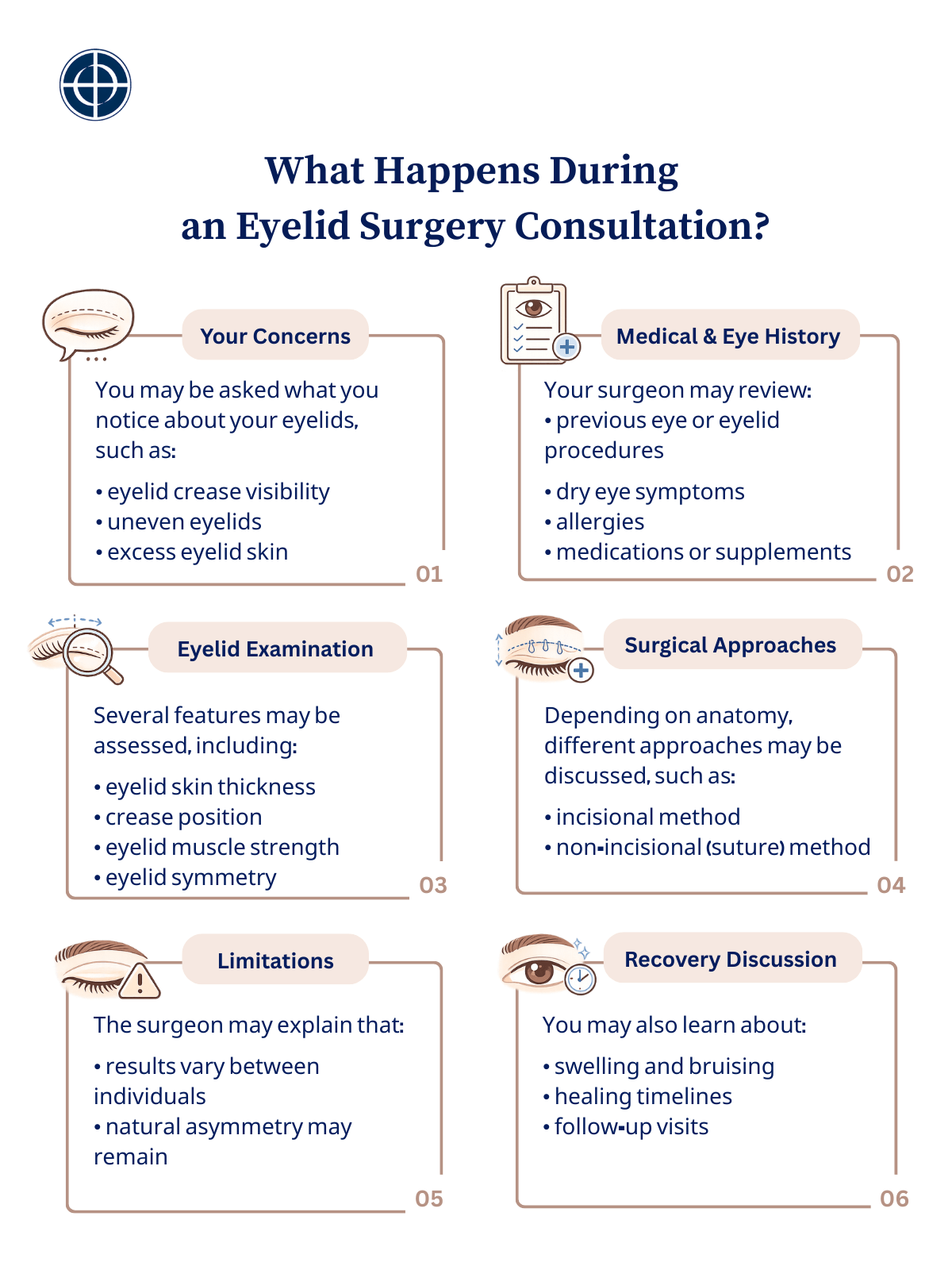
The surgeon usually starts by understanding your concerns, then moves on to examining your eyelids and reviewing your medical history. From there, the discussion shifts to what your anatomy allows, what approaches may be considered, and what limitations you should be aware of.
Here are the main parts that are typically covered.
1. Discussion of Your Concerns
The consultation usually starts with a conversation about what you’ve noticed about your eyelids.
You might describe things like:
- a crease that is not clearly visible
- eyelids that appear uneven
- excess skin on the upper eyelid
- differences between the two eyes
- eyelids that appear heavy or folded
The surgeon will often ask when you first noticed these changes and whether they have shifted over time.
This part is important because it helps you understand what you’re seeing to the underlying eyelid structure. From there, the surgeon can explain which parts of your anatomy are contributing to the concern.
Sometimes what you’re noticing comes down to natural asymmetry. Most people have small differences between the two sides of the face, including the eyelids.
2. Review of Medical and Eye History
The consultation also includes a review of your medical and eye history. This helps the surgeon understand anything that may affect surgery or recovery.
You may be asked about:
- previous eyelid or eye procedures
- dry eye symptoms
- eye allergies
- vision conditions
- contact lens use
- general medical history
- medications or supplements you are taking
If there are signs of dry eyes or issues with eyelid function, these may need to be examined more carefully before surgery is discussed.
3. Examination of Eyelid Anatomy
After that, the surgeon will examine your eyelids. This part is quite detailed, because small anatomical differences can affect how a crease forms and holds.
Some of the things that are usually assessed include:
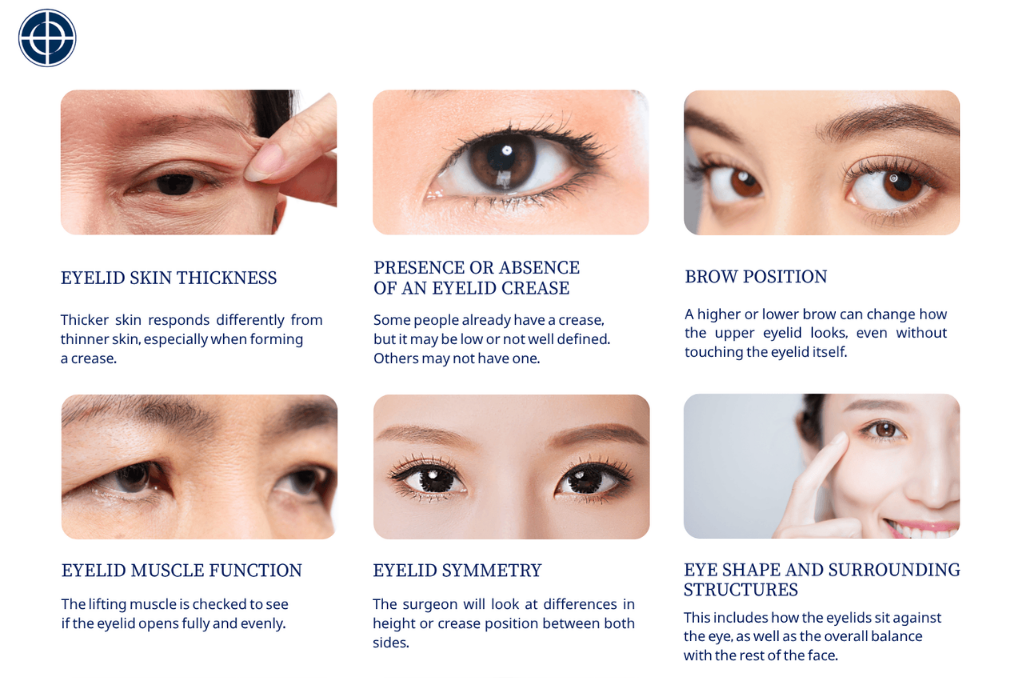
All these observations help the surgeon understand what your anatomy allows, and which approaches may or may not be suitable.
4. Discussion of Possible Surgical Approaches
If surgery is being considered, the surgeon may discuss two methods that may be suitable for your eyelids.
Incisional Method
This involves making a small incision along the planned crease. It allows the surgeon to adjust structures within the eyelid, such as skin, fat, or muscle.
This approach is often considered when the eyelid skin is thicker or when there is more tissue affecting how the crease forms.
Non-Incisional (Suture) Method
This uses sutures placed beneath the skin to form a crease, without a full incision.
It is generally considered when the skin is thinner and there is less excess skin.
At this stage, the focus is not on choosing a method straight away. The discussion is usually centred on what your eyelid anatomy allows, and which approaches may make sense based on that.
5. Explanation of Possible Limitations
Part of the consultation involves going through what surgery can and cannot change.
Eyelid surgery works on the soft tissues of the eyelid. It does not change the underlying bone structure or completely alter the natural shape of the eyes.
The final appearance is influenced by several factors, including:
- your bone structure
- eyelid skin thickness and quality
- muscle function
- existing differences between the two eyes
Most people have some degree of asymmetry. Surgery can adjust certain features, but it may not fully correct these differences.
This part of the discussion helps you understand what is realistically achievable for your eyelids.
6. Discussion of Risks and Recovery Considerations
The surgeon will also go through recovery and possible risks.
This usually includes:
- swelling and bruising after surgery
- some discomfort around the eyelids in the early period
- how long the swelling may take to settle
- follow-up visits after the procedure
Recovery can look quite different from person to person. Some may have swelling that settles within a few weeks, while others may take longer.
You will also be given instructions on how to care for the eyelids after surgery, as this plays a role in how the healing process progresses.
Questions People Often Ask During an Eyelid Surgery Consultation
It helps to come in with a few questions. This makes the discussion more focused and relevant to your eyelids.
Some questions patients often ask include:
- How does my eyelid anatomy affect the approach you would consider?
- What crease height would suit my eyelids?
- What are the limits of what surgery can change in my case?
- How long does swelling usually last?
- Are there other non-surgical options worth considering?
The consultation is an opportunity for open discussion, and patients may find it helpful to ask any questions they have about the process.
Preparing for Your Consultation
Preparing for the consultation can help make the discussion more productive.
Some practical suggestions include:
Bring medical information
If you have relevant medical records or information about previous eye treatments, it may be helpful to bring them along.
List medications and supplements
Certain medications and supplements can affect healing or bleeding risk.
Avoid heavy eye makeup if possible
This allows the surgeon to examine your eyelids more accurately.
Prepare questions beforehand
Writing down questions can help ensure important concerns are addressed during the consultation.
When Additional Evaluation May Be Recommended
In some cases, further assessment may be advised before proceeding.
This may be considered if there are:
- Concerns about eyelid muscle function
- Underlying eye conditions or structural concerns
- General medical conditions that may affect healing or suitability
This helps ensure that both eye health and overall condition are taken into account during planning.
Additional evaluation helps ensure that the health of the eyes is considered alongside aesthetic concerns.
Considering an Eyelid Surgery Consultation?
At Dream Aesthetics & Plastic Surgery, consultations are conducted by A/Prof Vincent Yeow, a board-certified plastic surgeon with over 20 years of experience in reconstructive and aesthetic surgery.
During a consultation, eyelid anatomy is carefully assessed and different surgical approaches may be discussed based on individual characteristics. This discussion may help individuals better understand how eyelid structure, skin characteristics, and facial proportions influence whether a particular technique is considered.
If you want to learn more about how eyelid anatomy is evaluated, you may schedule a consultation for a personalised assessment.