
For people considering eyelid surgery in Singapore, the recovery period is often one of their main concerns. Questions about swelling, scarring, downtime and how long healing may take are commonly discussed during consultation.
Healing timelines can vary depending on factors such as the surgical technique used, skin condition and the body’s natural healing response. Recovery after double eyelid surgery is usually gradual and takes time.
This guide explains the common stages of recovery after double eyelid surgery and the post operative care points to take note of during healing.
Understanding the Recovery Process
Double eyelid surgery refers to procedures that create or define an upper eyelid crease. Depending on the patient’s eyelid structure and treatment considerations, a doctor may recommend:- Non-incisional methods
- Incisional methods
What Patients Commonly Experience After Surgery
Immediately after surgery, it is common to experience temporary swelling, bruising and tightness around the eyelids. Patients may notice:- Mild discomfort
- Puffiness around the eyes
- Slight redness
- Temporary asymmetry due to swelling
- Heaviness of the eyelid
The Double Eyelid Surgery Recovery Timeline
The First Few Days After Surgery
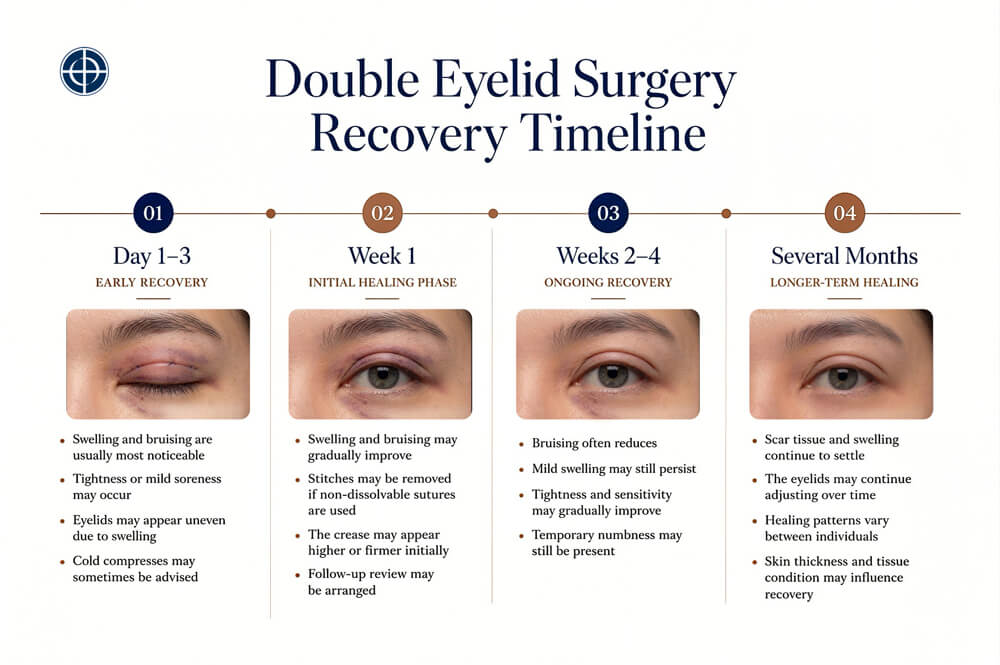
The first few days are usually when swelling and bruising are most noticeable. Some patients describe the eyelids as feeling tight, heavy and sore Cold compresses is always recommended to help manage swelling during the early stages of recovery. Patients are also generally advised to rest and avoid unnecessary strain. It is common for the eyelids to appear uneven initially due to swelling. Early swelling does not necessarily represent the longer-term healed appearance. During this period, patients are often advised to:- Keep the head elevated while resting
- Avoid strenuous exercise
- Avoid rubbing the eyes
- Follow medication and post care instructions carefully
The First Week
During the first week, swelling and bruising may still be present, though some patients notice gradual improvement over time. Patients who undergo incisional surgery may have their stitches removed seventh day after the procedure if non-dissolvable sutures are used. At this stage, it is common for the eyelid crease to appear higher, firmer and uneven because of the swelling. This is often temporary as healing continues.Weeks Two to Four
By this stage, visible bruising has often reduced significantly for many patients, though some swelling may remain. At the same time, healing is still ongoing beneath the surface. Patients may still notice morning swelling, mild sensitivity around the eyelids and temporary numbness in some areas. These symptoms often continue to improve gradually over time.Longer-Term Healing
Although much of the visible swelling improves within the first few weeks, the eyelids may continue to settle over a longer period. Scar tissue, swelling and tissue adjustment can continue evolving for several months. This is why doctors often advise patients not to judge the final appearance too early during recovery. Healing may also be influenced by factors such as:- Skin thickness
- Healing response
- Presence of excess eyelid tissue
- Smoking
- Existing medical conditions
Supporting the Recovery Process
While healing varies from person to person, there are several practical steps patients are commonly advised to follow after surgery.1. Follow Post-Operative Instructions Carefully
Patients are usually given detailed recovery instructions after surgery. These may include:- Taking prescribed medication appropriately
- Cleaning the eyelid area carefully
- Avoiding strenuous activity temporarily
- Attending follow-up appointments
2. Give Swelling Time to Settle
One of the more common concerns after surgery is swelling that appears uneven or lasts longer than expected. It is important to remember that healing is gradual. In many cases, the eyelids continue changing subtly over time. Trying to evaluate the final appearance too early may create unnecessary anxiety during recovery.3. Avoid Rubbing or Pressuring the Eyes
During healing, the eyelids remain sensitive. Patients are usually advised to:- Avoid rubbing the eyes
- Avoid sleeping face down
- Be gentle when cleansing the face
4. Rest and Recovery Matter
Some patients try to return to normal routines quickly after surgery. However, allowing enough time for rest is still important. Fatigue, poor sleep and excessive strain may contribute to prolonged swelling for some patients. Taking a more measured approach during the first few weeks can help support the recovery process.4. Attend Follow-Up Appointments
Follow-up visits allow the doctor to monitor healing and assess recovery progress. During these appointments, patients may discuss:- Swelling concerns
- Scar healing
- Tightness or discomfort
- Questions about recovery timelines
When Should Patients Seek Medical Advice?
While swelling and bruising are common after surgery, certain symptoms may require earlier medical review. Patients are generally advised to seek medical attention if they experience:- Increasing pain rather than gradual improvement
- Significant swelling that worsens suddenly
- Fever
- Unusual discharge from the surgical site
- Persistent difficulty closing the eyes
- Unexpected discomfort at the site of the procedure
Understanding Expectations During Recovery
One of the most important parts of recovery is understanding that healing is rarely immediate. The eyelids may appear:- Swollen
- Uneven
- Firmer than expected during the early stages of recovery