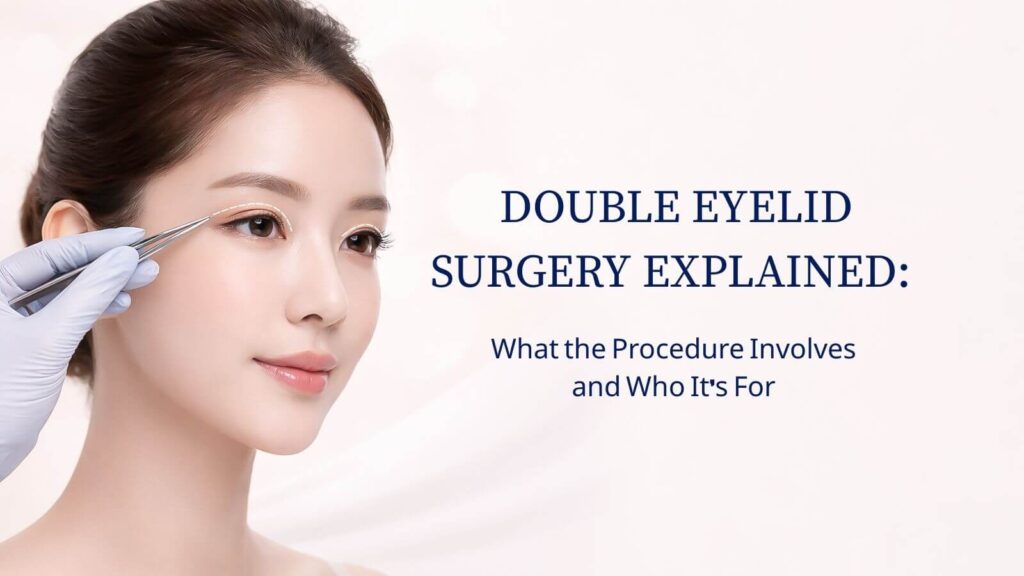
“Double eyelid surgery” is a commonly used term in Singapore to describe procedures that create or define a visible crease in the upper eyelid. For some people, this crease is naturally present and visible when the eyes are open. For others, the eyelid skin sits smoothly without a distinct fold.
Lack of an eyelid crease affects about 50% of people of Asian descent, which may be a reason why the procedure is prevalent among the East Asian ethnic population.
People in Singapore may start exploring double eyelid surgery for a range of reasons. Some notice how their eyes appear at rest, how makeup sits on their eyelids, or how their eyelids have changed over time due to ageing. The decision to seek more information is usually personal and shaped by individual preferences, rather than driven by a single standard or expectation.
This article is intended to explain what double eyelid surgery involves, outline the different approaches that may be discussed, and clarify who may or may not be suitable, so you can better understand the procedure before considering a consultation.
Understanding Upper Eyelid Anatomy
To understand why double eyelid surgery exists in different forms, it helps to have a basic idea of upper eyelid anatomy.
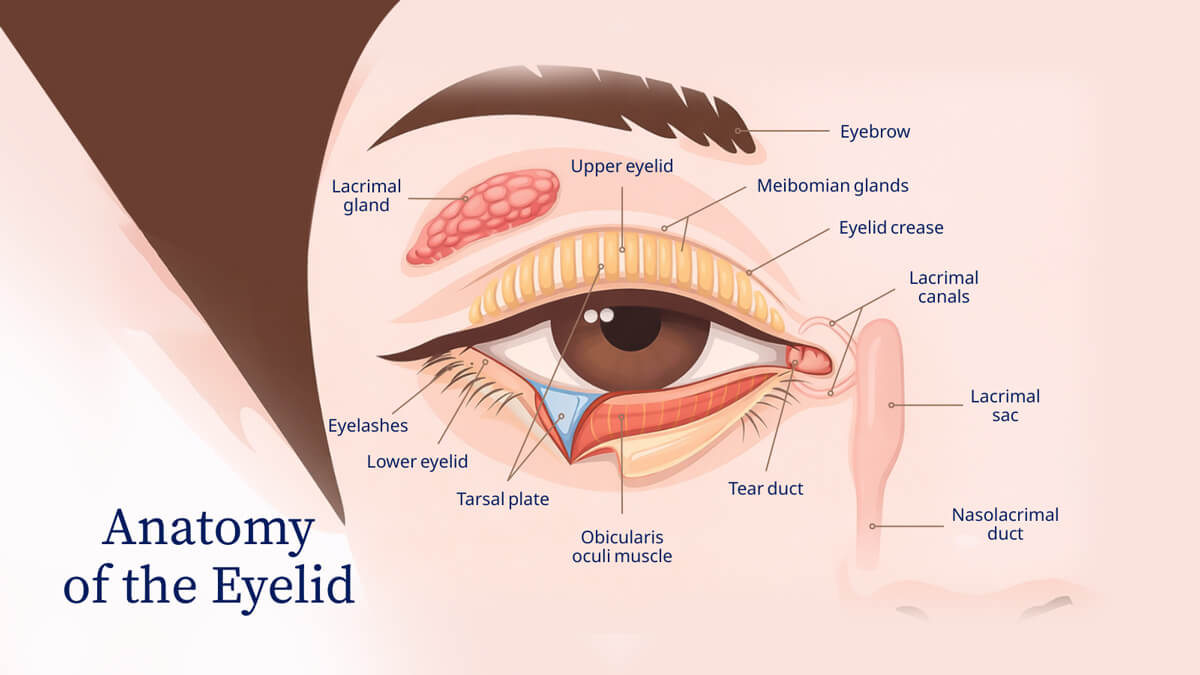
The upper eyelid is made up of several layers, including skin, muscle, connective tissue, and fat. These layers work together to allow the eyelid to open, close, and protect the surface of the eye.
A visible eyelid crease forms when there is a natural connection between the eyelid skin and deeper structures that move when the eye opens. In some people, this connection is present from birth, resulting in a crease that appears consistently. In others, the connection is absent or less defined, so the eyelid looks smooth when the eyes are open.
Eyelid anatomy varies significantly between individuals. Differences in skin thickness, fat distribution, muscle attachment, and brow position all affect whether a crease forms naturally and how it appears. These variations are one reason why no single surgical approach works the same way for everyone.
What Is Double Eyelid Surgery?
In practical terms, double eyelid surgery refers to a group of techniques designed to create or enhance an upper eyelid crease.
The goal of the procedure is to change how the eyelid folds when the eye opens, so that a crease becomes visible. Importantly, the surgery does not change the eye itself or affect vision directly. Instead, it alters how the eyelid skin interacts with underlying tissues.
Because eyelid anatomy differs from person to person, double eyelid surgery is not a single, standardised procedure. The term covers more than one approach, each adapted to different anatomical features and clinical considerations. These considerations are often part of discussions, where eyelid anatomy and expectations can vary between individuals.
Are There Different Types of Double Eyelid Surgery?
In Singapore, there are different categories of approaches used to create an eyelid crease. These approaches are chosen based on anatomy rather than preference alone, and no single method is inherently suitable for everyone.
Incisional techniques involve making a surgical incision along the intended crease line. Through this access, the surgeon can create a more defined connection between the skin and deeper eyelid structures. In some cases, additional adjustments to skin or fat may be discussed depending on a person’s anatomy.
Non-incisional or minimal-incision techniques use sutures or small access points to create the crease without a full-length incision. These methods rely on stitching techniques to form the connection that allows a crease to appear when the eye opens.
In certain situations, doctors may also discuss whether additional adjustments—such as addressing excess skin or fat—are relevant.
How Doctors Decide Which Approach May Be Considered
Choosing an approach to double eyelid surgery in Singapore starts with a careful assessment by a plastic surgeon. This usually involves looking at how the eyelids are shaped, how they move, and how they function during everyday activities like opening and closing the eyes.
These may include eyelid thickness, which can affect how easily a crease forms and holds. Skin laxity is also considered, particularly in individuals who have noticed changes with ageing. Fat distribution within the eyelid can influence both appearance and movement.
Muscle movement and how the eyelid opens and closes are carefully assessed, as the eyelid plays an important role in protecting the eye. Brow position is also relevant, as it can affect how much skin rests on the eyelid itself.
Who May Be Suitable for Double Eyelid Surgery
Whether someone is suitable for double eyelid surgery can only be determined after a medical consultation, as eyelid structure and eye health differ from person to person.
In general, the procedure may be discussed with individuals who:
- Do not have a visible upper eyelid crease
- Have uneven creases between the two eyes, or
- Have noticed changes in their eyelids over time, such as looser skin.
That said, having an interest in double eyelid surgery does not automatically mean it is suitable. Doctors look beyond appearance alone and consider how the eyelids are structured, how they move during blinking and eye closure, and whether the eyes are functioning comfortably. General health and medical history are also reviewed, as these can affect healing and safety.
What Happens During a Double Eyelid Surgery Consultation?
A consultation for double eyelid surgery is mainly a discussion to understand your concerns and assess your eyelids, rather than a session where you are expected to make a decision right away.
The doctor will usually start by asking about your medical history and any eye-related issues, such as dryness, irritation, or previous eye procedures. They will then examine your eyelids in person, observing how they move, how your eyes open and close, and how the skin and underlying tissues behave.
Based on this assessment, the doctor may explain which approaches could be considered for your eyelids and what their limitations are. Possible risks and what recovery may involve are also discussed, so you have a clearer idea of what the procedure involves.
This process allows both you and the doctor to decide whether it makes sense to explore the procedure further, based on your anatomy, eye health, and overall considerations.
At Dream Aesthetics & Plastic Surgery, consultations are conducted by A/Prof Vincent Yeow, a board-certified plastic surgeon with over 20 years of experience in the field of reconstructive and aesthetic surgery. To learn more, book a consultation with us today.