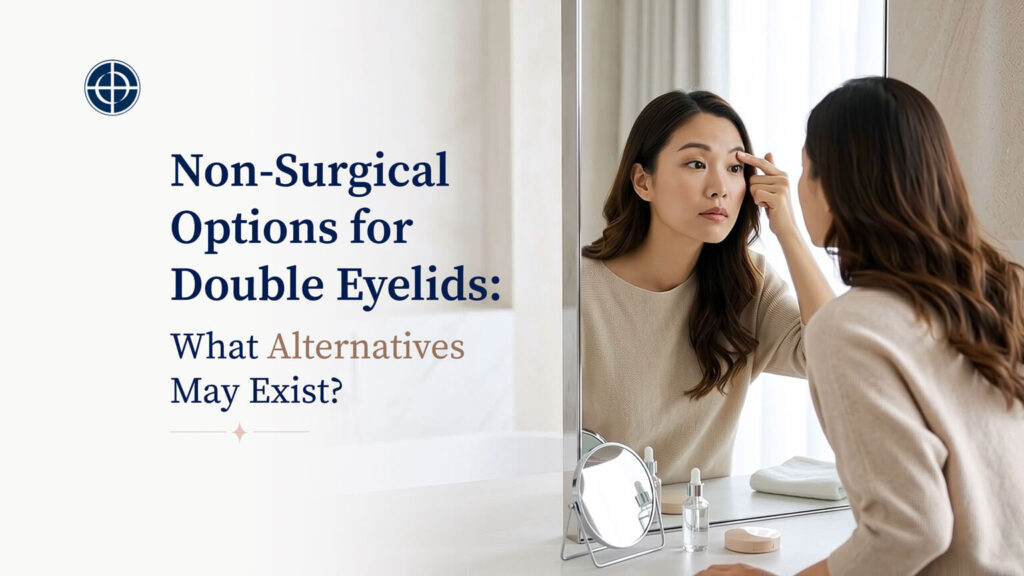
There are some patients who may seek non-surgical options to create the appearance of a double eyelid crease. This often leads to the question: can the appearance of a double eyelid be created without surgery?
There are non-surgical methods that may temporarily create the appearance of a double eyelid. However, they work differently from surgery and may not be suitable for everyone. Suitability depends largely on the eyelid anatomy and the underlying concern being addressed.
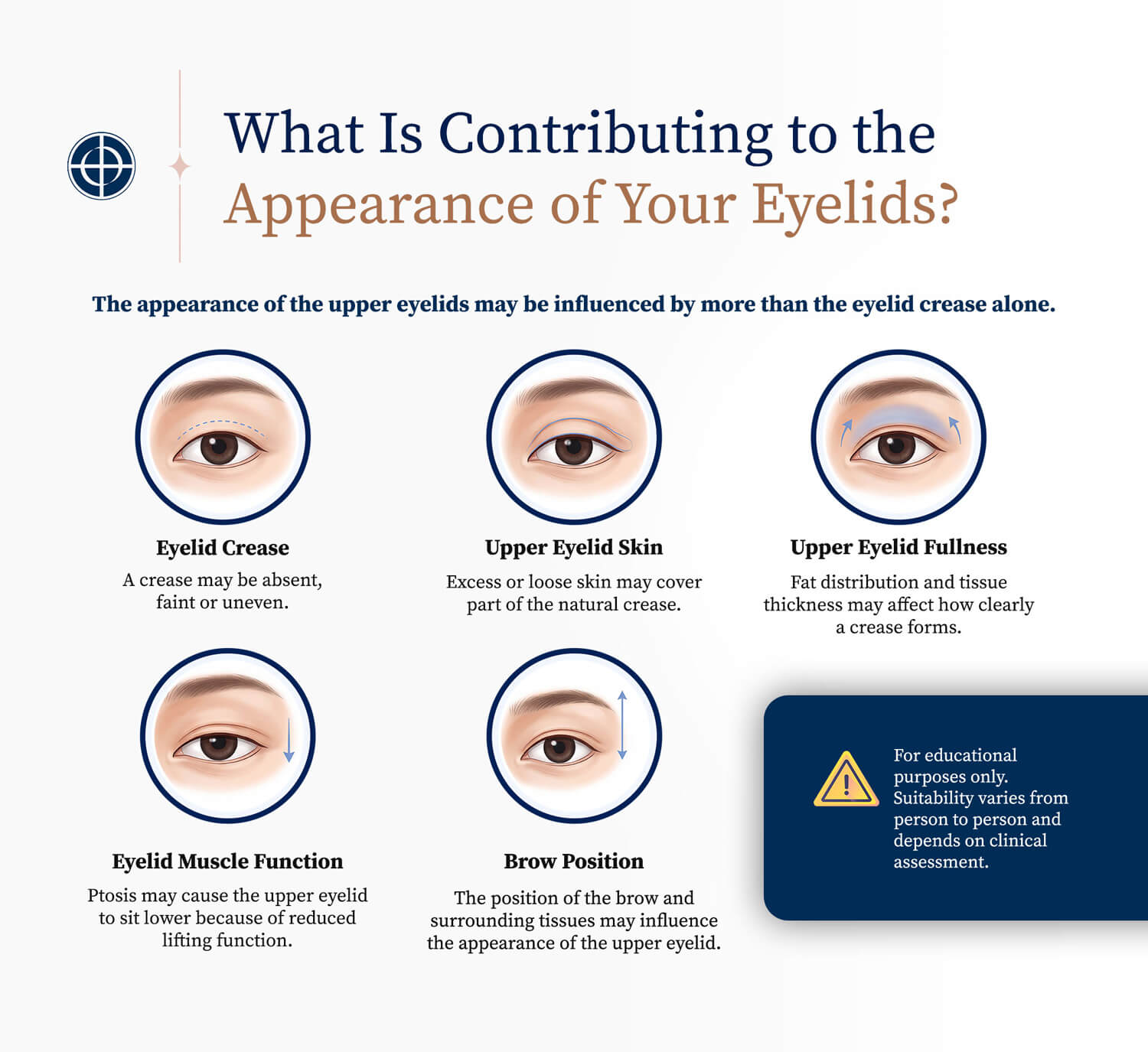
Consideration of treatments begins with understanding the eyelid anatomy and a careful assessment to determine whether the concern is related to the eyelid crease, excess skin, muscle function or a combination of factors.
This guide explains the alternatives that may be discussed and what patients should understand when comparing temporary methods with surgical options.
Why Some Patients Prefer Non-Surgical Alternatives
There are different reasons why someone may prefer to explore non-surgical alternatives. Some may wish to avoid a surgical procedure or recovery period, while others may want to try the temporary appearance of a crease before considering longer-lasting options.
However, whether a non-surgical method may be suitable is not always straightforward. Two patients may both ask about double eyelids, yet the underlying concerns may be different. One may have a faint or less defined crease, while another may have excess upper eyelid skin that becomes more noticeable over time. Another may have ptosis, in which the upper eyelid sits lower than expected because of reduced function of the muscle responsible for lifting it.
These concerns are assessed and managed differently, which is why assessment focuses on identifying what is contributing to the eyelid appearance before discussing the available options.
Can Double Eyelids Be Created Without Surgery?
Non-surgical methods, such as the use of glue and tape, may create the appearance of a double eyelid temporarily, but they do not form a permanent crease.
Unlike surgical techniques, non-surgical methods do not create lasting attachments within the eyelid tissues that form a crease. Instead, methods such as eyelid tape or glue use external support to hold the skin in a temporary fold.
How noticeable and stable the temporary crease appears depends on factors such as skin thickness, upper eyelid fullness and the person’s natural eyelid anatomy. For example, a temporary crease may be easier to form in thinner eyelid skin, while thicker skin or fuller upper eyelids may make the fold less defined or more difficult to maintain.
How Do Eyelid Tape and Eyelid Glue Work?
Eyelid tape and eyelid glue are temporary cosmetic products used to create the appearance of an upper eyelid crease.
Both work by holding part of the upper eyelid skin in a temporary fold. When the eyes open, this fold may create the appearance of a double eyelid crease.
Some people may use these products to try the temporary appearance of an eyelid crease or for occasional cosmetic use.
However, they also have limitations. The effect generally lasts only while the product remains in place, and the tape or glue must be reapplied for each use. In Singapore’s warm and humid weather, perspiration and natural skin oils may also affect how well the product adheres throughout the day.
Repeated application or removal may irritate the delicate eyelid skin, particularly when the product is removed roughly, used for prolonged periods or causes sensitivity.
Eyelid tape and eyelid glue are therefore temporary cosmetic aids and do not create the lasting tissue attachments associated with surgical crease formation.
Are Dermal Fillers an Alternative?
Apart from eyelid tape and glue, some patients may also ask whether dermal fillers are an alternative to double eyelid surgery. However, dermal fillers are not intended to create a double eyelid crease.
What Are Buried Suture Techniques?
Buried suture techniques are minimally invasive surgical techniques that involve small punctures or incisions. Sutures are then placed beneath the skin to create attachments that form the eyelid crease.
Suitability varies from person to person. Factors such as eyelid skin thickness, upper eyelid fullness, excess skin and the existing eyelid anatomy may influence whether a buried suture technique can be considered.
Temporary and Longer-Lasting Approaches
Temporary methods require ongoing maintenance. For instance, eyelid tape needs to be reapplied with each use.
Surgical techniques aim to create a longer-lasting crease by forming or adjusting attachments within the eyelid tissues. However, no procedure prevents the natural ageing process. The skin and surrounding tissues continue to change over time, so the appearance and longevity of a crease vary between persons.
Rather than comparing options by duration alone, patients should first understand which approaches may address their concerns and how their anatomy may affect suitability.
Final Thoughts
There are non-surgical ways to create the temporary appearance of a double eyelid, such as eyelid tape or glue, as well as minimally invasive surgical techniques that may be discussed in selected cases.
The approach that may be considered depends on factors such as eyelid anatomy, skin characteristics, the underlying cause of the concern and the person’s goals. For example, eyelid tape and glue are non-surgical, but their effects are temporary and their adhesion may be affected by perspiration, skin oils or humidity.
A consultation allows these factors to be assessed before discussing which approaches may be suitable, along with their limitations and expected effects.
At Dream Aesthetics & Plastic Surgery, consultations are conducted by Vincent Yeow, a board-certified plastic surgeon with more than 20 years of experience in reconstructive and aesthetic surgery. A consultation can be arranged if you would like to learn more.