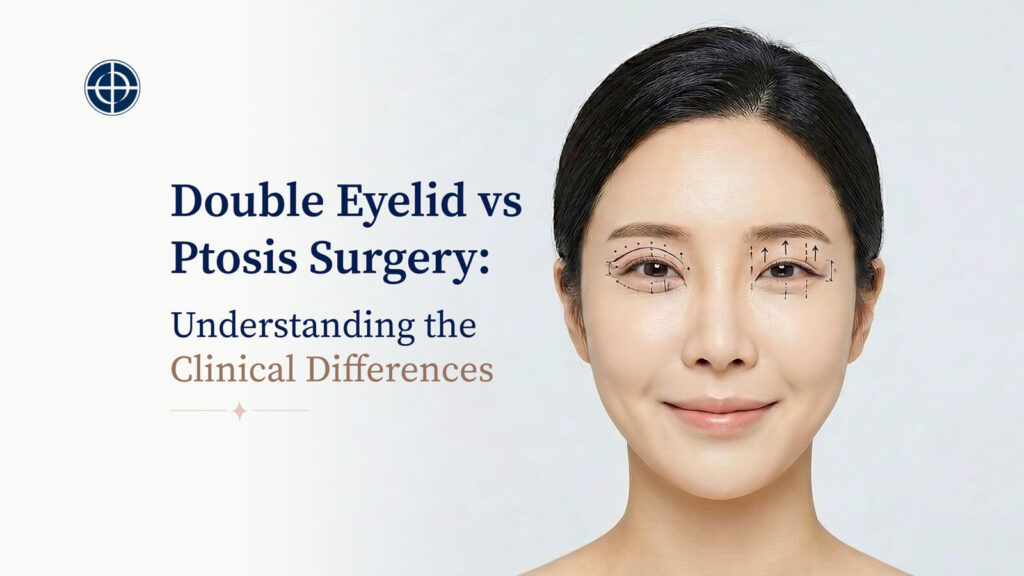
Double eyelid surgery and ptosis surgery are two commonly discussed eye surgeries in Singapore. However, these two can sometimes be confused with one another: both involve the upper eyelids and can affect the appearance of the eyes. It is important to note that these procedures are intended to address different concerns and involve different surgical objectives.
Understanding these distinctions is important because not every patient has the same concern or situation. In some cases, concerns that appear cosmetic may be linked to an underlying eyelid condition that affects how the eyelid functions. Knowing the difference between double eyelid surgery and ptosis surgery can help patients develop a clearer understanding of which procedure may be appropriate for their needs and make more informed decisions.
If you have been searching for information about “double eyelid surgery vs ptosis surgery” or “difference between double eyelid and ptosis surgery,” this guide explains the key differences in purpose, procedure, recovery and expected outcomes.
Understanding the Upper Eyelid
Before comparing the procedures, it helps to understand what makes up our upper eyelids and how it works.
The upper eyelid is supported by several structures, including skin, fat and muscles. One of the most important muscles is the levator muscle, which helps lift the eyelid when the eyes are open. When the levator muscle is working normally, the upper eyelid opens well and does not droop over the pupil or block the vision. When the levator muscle is weak or stretched, it may not lift the upper eyelid well. As a result, the eyelid can droop lower than usual. This condition is known as ptosis.
Because eyelid position and eyelid crease formation are closely related, patients often assume that they need double eyelid surgery when ptosis correction might be the necessary procedure.
What Is Double Eyelid Surgery?
Double eyelid surgery is a procedure performed to create or define an upper eyelid crease.
Some patients naturally have a visible crease, while others may have a less defined crease or none at all. Double eyelid surgery focuses on creating a connection between the skin and underlying tissues so that a crease becomes visible when the eyes are open.
Depending on the patient’s anatomy, a doctor may recommend non-incisional or incisional techniques.
The primary goal of double eyelid surgery is crease formation and eyelid contouring rather than changing the strength of the eyelid-opening muscles.
Patients who are considering eyelid crease creation often discuss factors such as crease height, crease shape and overall eyelid appearance during consultation.
What Is Ptosis Surgery?
Ptosis surgery is performed to address drooping of the upper eyelid caused by weakness or dysfunction of the muscles responsible for lifting the eyelid.
Unlike double eyelid surgery, the focus is not primarily on creating a crease, but instead, improving eyelid position by adjusting or tightening the muscles that elevate the eyelid.
Patients with ptosis may experience:
- Drooping of one or both upper eyelids
- Eyes that look tired or heavy
- Difficulty opening the eyes fully
- Blocked upper vision in more severe cases
- Uneven eyelid height between both eyes
The severity of ptosis varies. Some patients experience only mild drooping, while others may have more significant functional concerns. During assessment, a doctor may evaluate eyelid height, muscle strength and eyelid movement before recommending treatment.
Double Eyelid Surgery vs Ptosis Surgery: What Is the Main Difference?
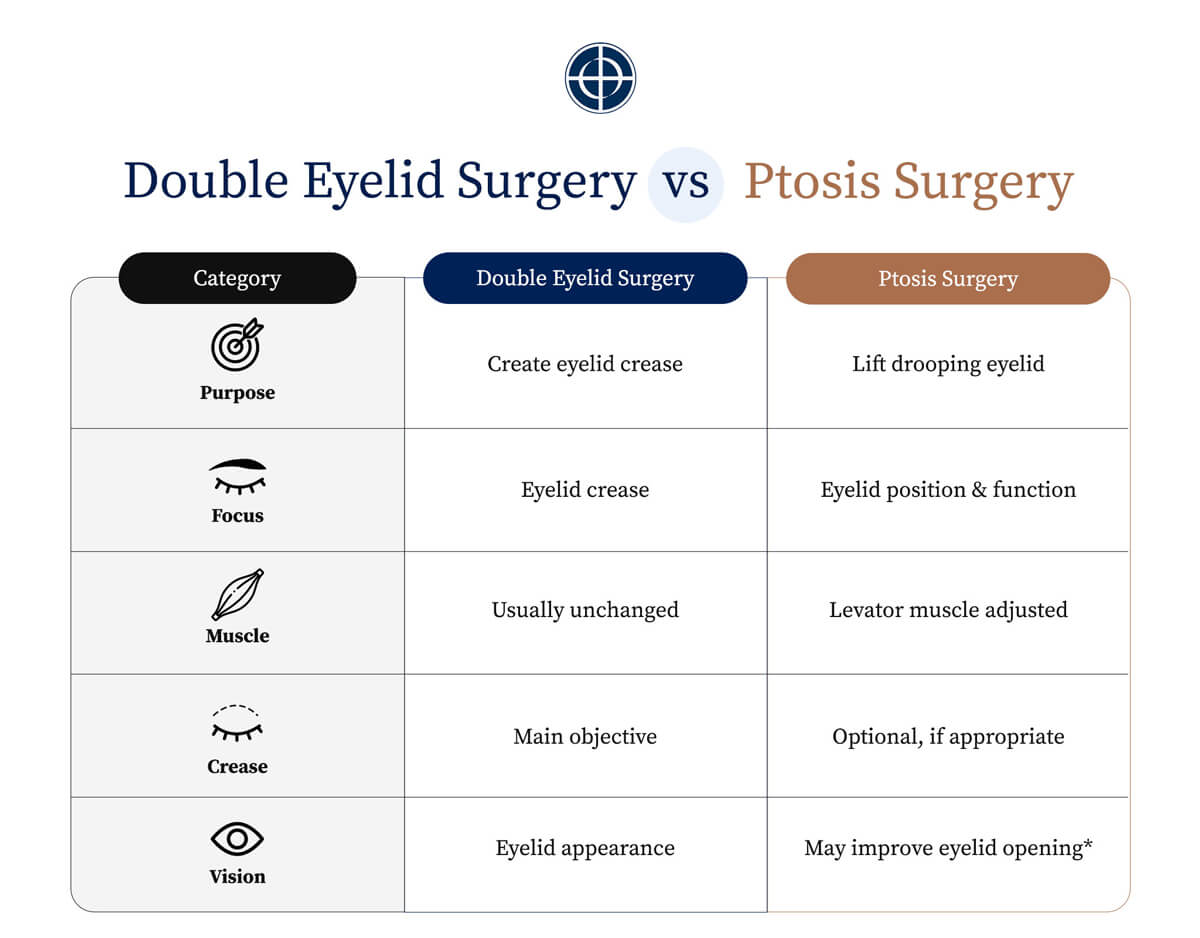
One way to understand the difference is to look at what each procedure is intended to address.
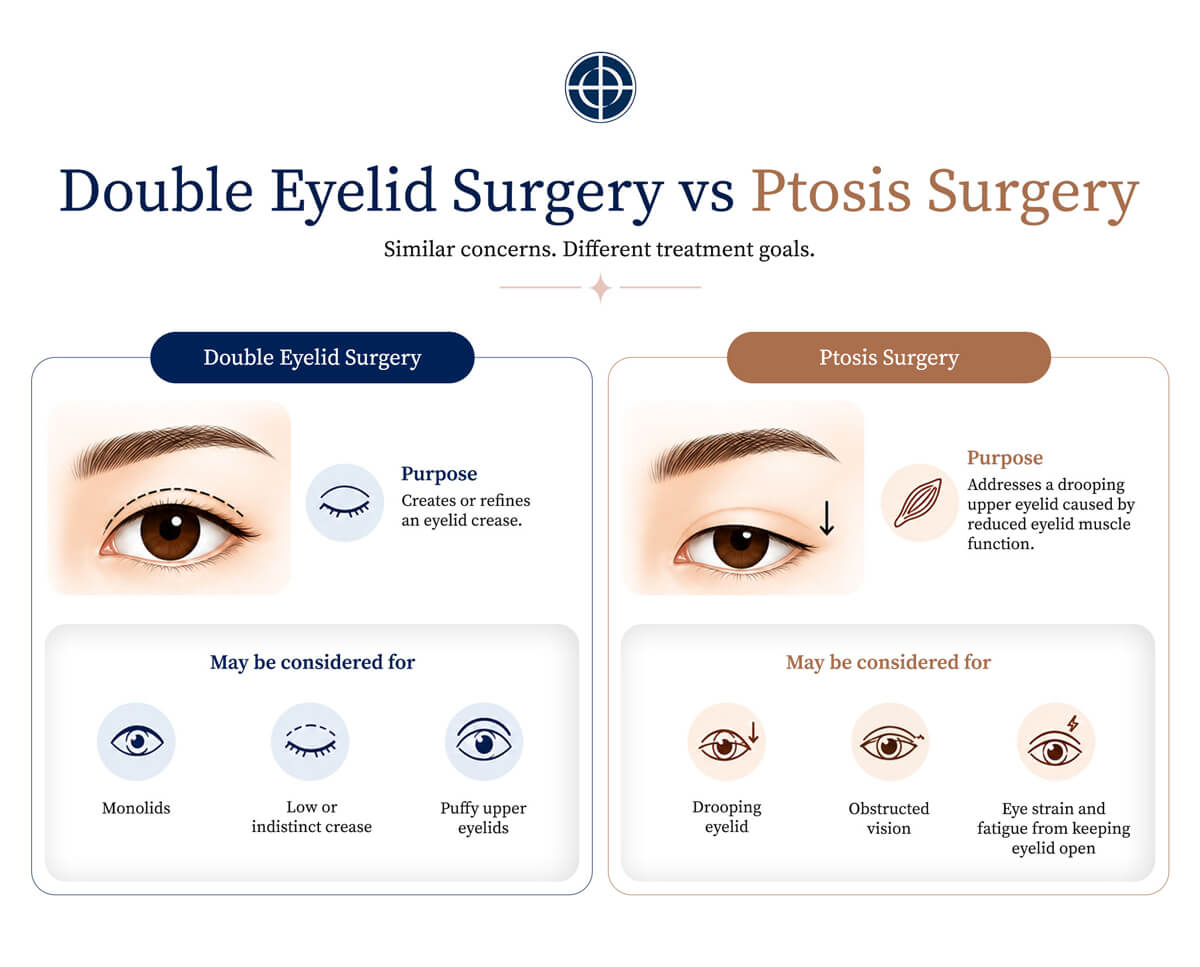
Although both procedures involve the upper eyelid, they serve different clinical purposes. It is important to get a consultation with a certified plastic surgeon to ensure the appropriateness of the surgery before getting the procedure.
Can a Patient Need Both Double Eyelid and Ptosis Surgeries?
In some situations, yes. It is possible that a patient may have both a poorly defined eyelid crease and underlying ptosis.
When this occurs, addressing only the crease without considering the eyelid muscle may not fully resolve the concern.
For example, creating a more defined crease does not automatically correct a drooping eyelid caused by muscle weakness. This is one reason why a thorough assessment is important before surgery. The underlying cause of the concern should be identified before discussing treatment options.
How Do Doctors Determine Which Procedure May Be Suitable?
The recommendation typically depends on clinical assessment rather than appearance alone.
During consultation, the doctor may evaluate:
- Eyelid height
- Eyelid symmetry
- Muscle function
- Skin and tissue characteristics
- Other medical conditions of the patient
Measurements may also be taken to assess how the eyelids move when opening and closing the eyes. These findings help determine whether the concern relates primarily to crease formation, ptosis or a combination of both.
Comparing the Procedures of Double Eyelid and Ptosis Surgeries
Although both procedures involve the eyelids, the surgical approach may differ.
Double eyelid surgeries generally focus on creating or refining the eyelid crease, adjusting skin and tissue relationships and improving crease definition. Depending on the technique used, sutures or small incisions may be involved.
On the other hand, ptosis surgery generally focuses on adjusting the eyelid-lifting mechanism, tightening or reattaching the levator muscle and improving eyelid elevation. Because the structures involved are different, the surgical planning process may also differ.
Recovery After Double Eyelid Surgery
Recovery varies from patient to patient, but common experiences may include:
- Swelling
- Bruising
- Temporary tightness
- Mild discomfort
The eyelids often appear more swollen during the first week before gradually settling over time. Healing continues beyond the initial recovery period and the result of the crease continues to form as the swelling subsides.
Recovery After Ptosis Surgery
Recovery after ptosis surgery may involve similar symptoms, including:
- Swelling
- Bruising
- Temporary tightness
- Eyelid sensitivity
Because the procedure involves structures responsible for lifting the eyelid, doctors may also monitor eyelid height and function during follow-up appointments. As with any surgical procedure, healing timelines can vary.
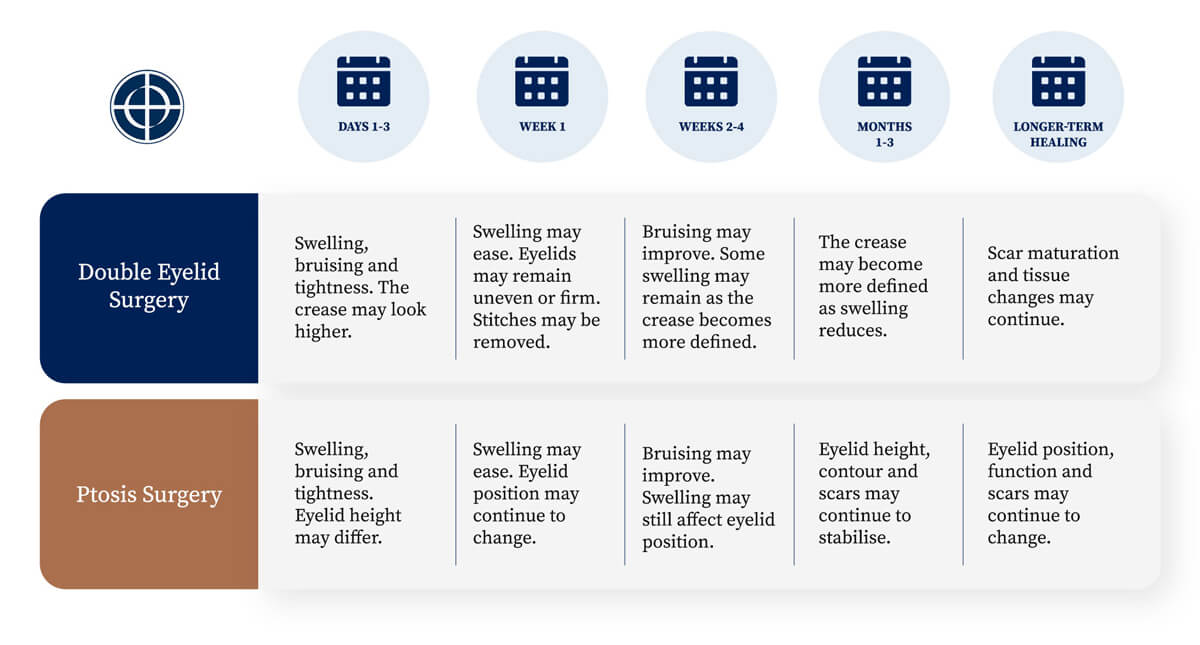
It is important to note that there are several factors that may affect recovery. If any of the symptoms become uncomfortable or if there are any unexpected symptoms, consult your surgeon immediately.
Questions Patients May Wish to Ask During Consultation
If you are unsure what is causing your eyelid concern, it may be helpful to ask:
- What is causing my upper eyelid to look droopy or uneven?
- Can my concern be improved with double eyelid surgery or do I need ptosis correction?
- What can I expect during recovery?
- What are the possible risks, limitations and expected changes after surgery?
During consultation, it is helpful to ask not only what procedure may be suitable, but also why it is recommended. Understanding the cause of the concern, recovery process and possible limitations can help patients make a more informed decision.
Final Thoughts
Although double eyelid surgery and ptosis surgery both involve the upper eyelids, they are not interchangeable procedures. Double eyelid surgery focuses primarily on creating or refining an eyelid crease, while ptosis surgery addresses drooping caused by weakness of the eyelid-lifting structures.
Because some patients may have concerns that involve both eyelid appearance and eyelid function, a proper assessment is important before determining the most appropriate approach.
If you are considering eyelid surgery in Singapore, speaking with a qualified doctor can help clarify the underlying cause of your concerns and provide a better understanding of the options that may be suitable for your condition.
At Dream Aesthetics & Plastic Surgery, consultations are conducted by A/Prof Vincent Yeow, a board-certified plastic surgeon with more than 20 years of experience in reconstructive and aesthetic surgery. A consultation can be arranged if you would like to learn more.