
Double eyelid surgery is a commonly requested cosmetic procedure in Singapore, especially among patients who are considering a more defined upper eyelid crease. While most conversations tend to focus on recovery time or aesthetic outcomes, it is important to consider risks before deciding on having the procedure.
Risk discussions are part of informed decision-making. Like any medical procedure, double eyelid surgery comes with possible complications, limitations and recovery considerations. Some are temporary and manageable during healing, while others may require additional follow-up care. Understanding these possibilities can help patients make a more informed decision before proceeding with surgery.
If you have been researching the risks of double eyelid surgery or potential risks of eyelid surgery, this guide covers some of the more commonly discussed concerns, what may affect recovery and how patients can better prepare before the procedure.
What Is Double Eyelid Surgery?
Double eyelid surgery refers to procedures that create or define an upper eyelid crease. Depending on the patient’s eyelid structure and clinical assessment, different approaches may be considered.
These may include:
- Non-incisional techniques
- Incisional techniques
The recommended method depends on factors such as skin thickness, excess tissue and overall eyelid anatomy.
Why Understanding the Risks Is Important
Every surgical procedure involves a degree of uncertainty. Understanding the possible risks and limitations allows patients to better understand what the procedure may involve and what can reasonably be expected during recovery.
In double eyelid surgery, this is especially important because eyelid anatomy differs from person to person. Factors such as skin thickness, existing eyelid asymmetry, tissue condition and underlying muscle function may influence both the surgical approach and the healing process.
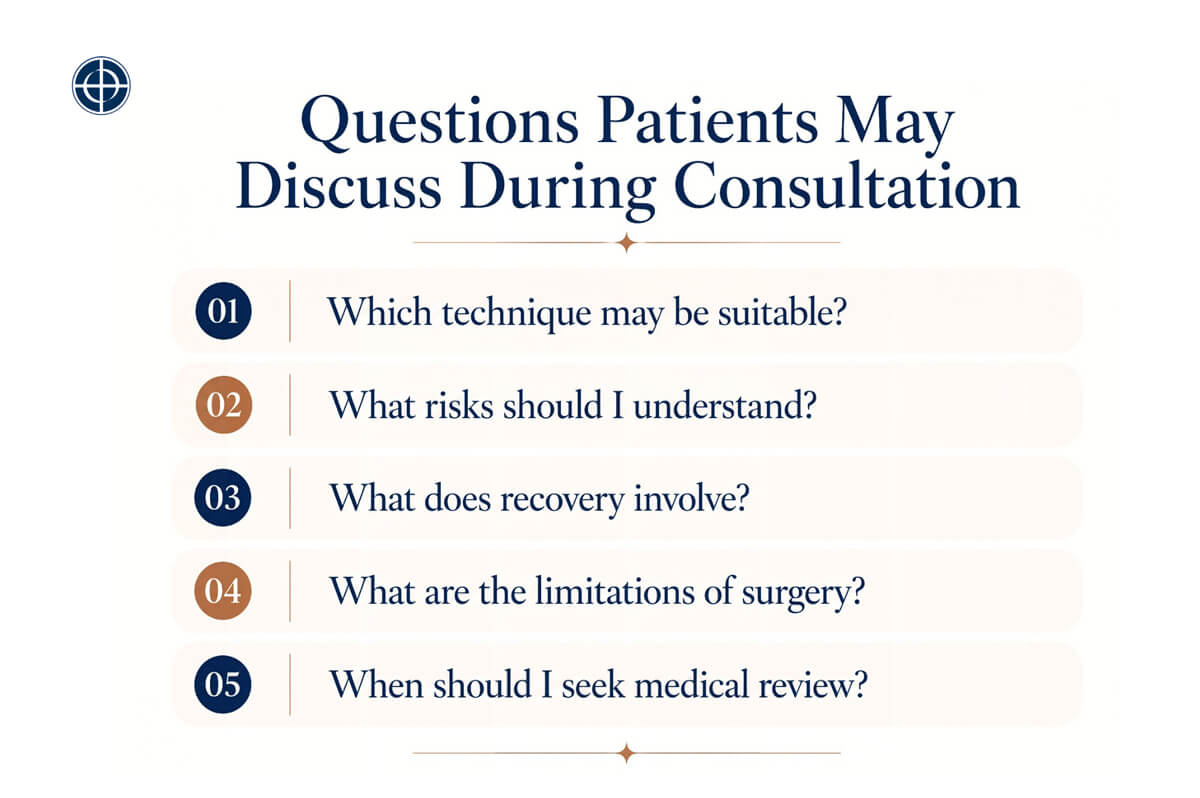
A consultation is usually where these factors are assessed and discussed. During the consultation, patients should clarify:
- Whether the procedure is suitable for their condition
- Which surgical approach may be considered
- What to expect during recovery
- What are the possible complications or limitations
- Other questions they may have about the recommended approach
These discussions can help patients develop a clearer understanding of the procedure before making a decision.
Potential Risks of Double Eyelid Surgery
Recovery experiences vary and double eyelid surgery still carries potential risks.
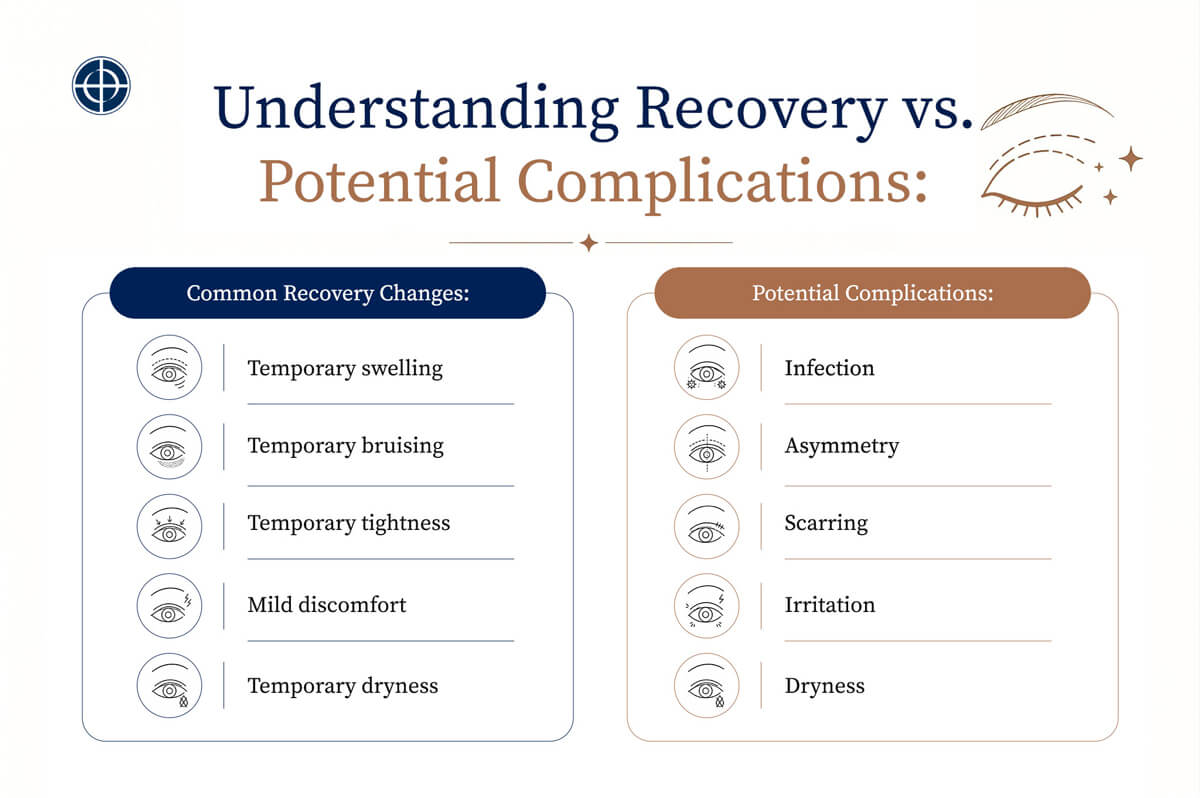
1. Infection
As with procedures involving incisions, infection is a possible complication. Symptoms that may require medical review include:
- Increasing redness
- Swelling that worsens over time
- Fever
- Discharge from the surgical site
Following post-procedure instructions carefully may help support recovery and reduce the likelihood of infection.
2. Bleeding and Bruising
Bruising and minor bleeding may occur during the recovery period. Some patients may bruise more easily depending on factors such as medications, supplements or existing medical conditions.
Patients are advised to discuss their medical history and current medications during consultation so that appropriate precautions will be considered.
3. Scarring
Incisional double eyelid surgery involves small cuts along the eyelid crease. As with any procedure that involves an incision, a scar will form naturally as part of the healing process.
Scar appearance may vary depending on:
- Skin characteristics
- Healing response
- Surgical technique
- Post-operative care
For some patients, scars soften gradually with time. However, it is important to understand that healing patterns differ from person to person.
4. Asymmetry
Perfect symmetry is not a realistic expectation, as faces can inherently be asymmetrical.
Following surgery, some patients may notice:
- Differences in crease height
- Variations in swelling between the eyelids
- Slight differences in eyelid shape or contour
In some situations, asymmetry becomes more noticeable if underlying muscle weakness or anatomical differences are present prior to surgery.
During consultation, doctors should discuss the degree of improvement that may be achievable based on the patient’s anatomy rather than aiming for exact symmetry.
5. Dry Eyes or Eye Irritation
Some patients may experience temporary dryness or irritation following surgery. Symptoms may include dryness, watery eyes, light sensitivity or tightness around the eyelids.
Temporary swelling after surgery may also affect vision briefly in some cases. This usually improves as the swelling settles and healing progresses.
Patients should inform the doctor if symptoms are persistent, worsening or affecting their vision.
6. Difficulty Closing the Eyes Completely
Swelling or tightness during the early stages of recovery may occasionally make it difficult for patients to close their eyes fully.
Monitoring recovery through follow-up appointments is important so that healing can be assessed appropriately.
Patients are usually advised to follow post-operative instructions carefully and avoid unnecessary strain on the eyelids during recovery.
Revision Surgery and Its Challenges
In some situations, patients may seek revision surgery after undergoing eyelid procedures.
Common concerns may include:
- Asymmetry
- A crease that appears too high
- An unnatural contour
Revision procedures are often more complex because the normal anatomy may already have been altered and scar tissue may be present.
This can limit flexibility and may require more careful surgical planning.
Factors That May Influence Healing and Recovery
Healing varies from person to person and may be influenced by several factors, including:
- Skin thickness
- Presence of excess fat
- Existing medical conditions
- Smoking
- Previous eyelid procedures
The condition of the tissues can also affect how the eyelid settles during recovery. Skin thickness, fat distribution and muscle strength may influence both healing and the eventual appearance of the crease.
Supporting the Recovery Process
Recovery patterns vary from person to person. Patients can take the following measures to support their healing and recovery.
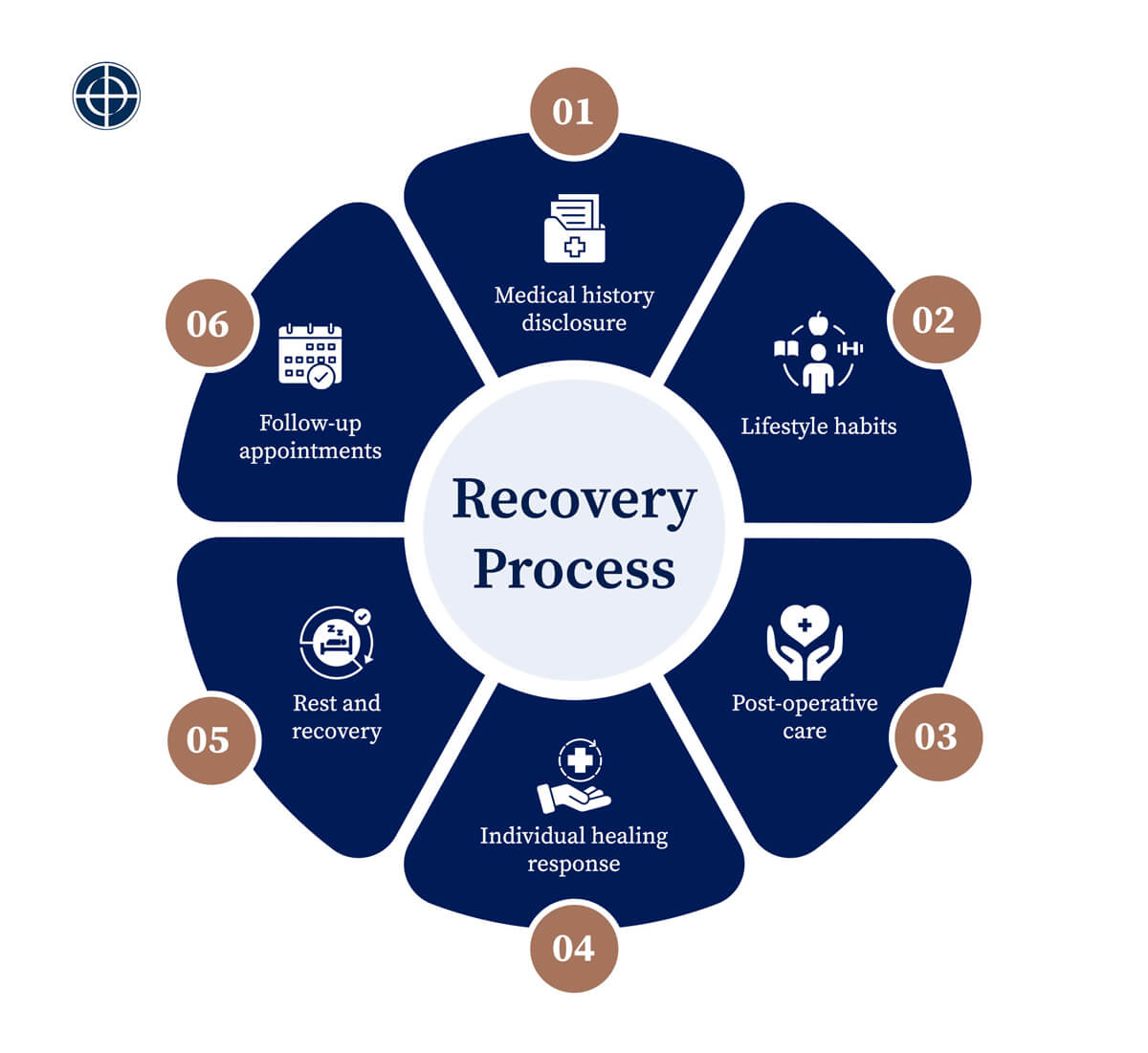
Attend Follow-up Consultations
A follow-up consultation allows the doctor to:
- Examine the eyelids for swelling and bruising
- Assess how the incision is healing
- Check for signs of infection or other complications
- Review eyelid symmetry and contour as healing progresses
- Discuss any discomfort, tightness or concerns raised by the patient
- Provide guidance on ongoing recovery and activity restrictions
Follow Post-Operative Instructions Carefully
Post-operative care plays a role in recovery and healing where swelling, healing response and scar formation may continue to change over time, which is why follow-up care remains important during recovery.
Instructions may include:
- Avoiding strenuous activities temporarily
- Taking prescribed medication appropriately
- Attending follow-up appointments
- Following post operative care instructions diligently
- Keeping the surgical area clean
Understanding Long-Term Changes
The eyelids continue to change naturally with age, even after surgery. Skin laxity, tissue descent and changes in facial structure may still occur over time.
Patients should understand that while adjustments or revisions may sometimes be possible, it may not always be possible to restore the eyelid exactly to its original pre-surgery appearance due to tissue changes and scarring.
Double Eyelid Surgery Consultation
As with any surgical procedure, double eyelid surgery involves potential changes, limitations and risks. Understanding these risks, limitations and the recovery process is an important part of making an informed decision.
During the consultation, the doctor will assess your eyelid condition, discuss your concerns and explain which technique may be suitable. The consultation also covers what post-surgery recovery may involve, based on the recommended technique and any pre-existing factors that may affect healing.
At Dream Aesthetics & Plastic Surgery, consultations are conducted by A/Prof Vincent Yeow, a board-certified plastic surgeon with more than 20 years of experience in plastic, reconstructive and aesthetic surgery. A consultation can be arranged if you would like to learn more.