
If you have been researching eyelid surgery, you may have come across terms such as double eyelid surgery, upper blepharoplasty and lower blepharoplasty. These terms are sometimes used together or interchangeably, which can make it difficult to understand what each procedure refers to.
Blepharoplasty is a broad medical term for eyelid surgery. Depending on the area treated and the concerns being addressed, it may involve the upper eyelids, lower eyelids or both.
Double eyelid surgery usually refers to an upper eyelid procedure that focuses mainly on creating or refining an eyelid crease. Upper blepharoplasty refers more broadly to surgery involving the upper eyelid and may address excess skin, fat or other tissues. In some cases, upper blepharoplasty may also include crease creation or refinement.
This means that double eyelid surgery and upper blepharoplasty can overlap, but the terms do not always describe exactly the same procedure.
Understanding how the terms relate is important because the surgical plan depends on factors such as the patient’s eyelid anatomy, concerns and treatment goals. One person may require crease creation alone, while another may require tissue adjustment, crease refinement or a combination of these.
This article explains what double eyelid surgery and blepharoplasty mean, where the terms overlap and how doctors assess which aspects of eyelid surgery may be relevant to a patient.
A Common Misconception About Eyelid Surgery
One misconception is that double eyelid surgery and blepharoplasty are two completely separate types of surgery. In medical use, however, blepharoplasty is a broad term that can refer to several procedures involving the upper or lower eyelids.
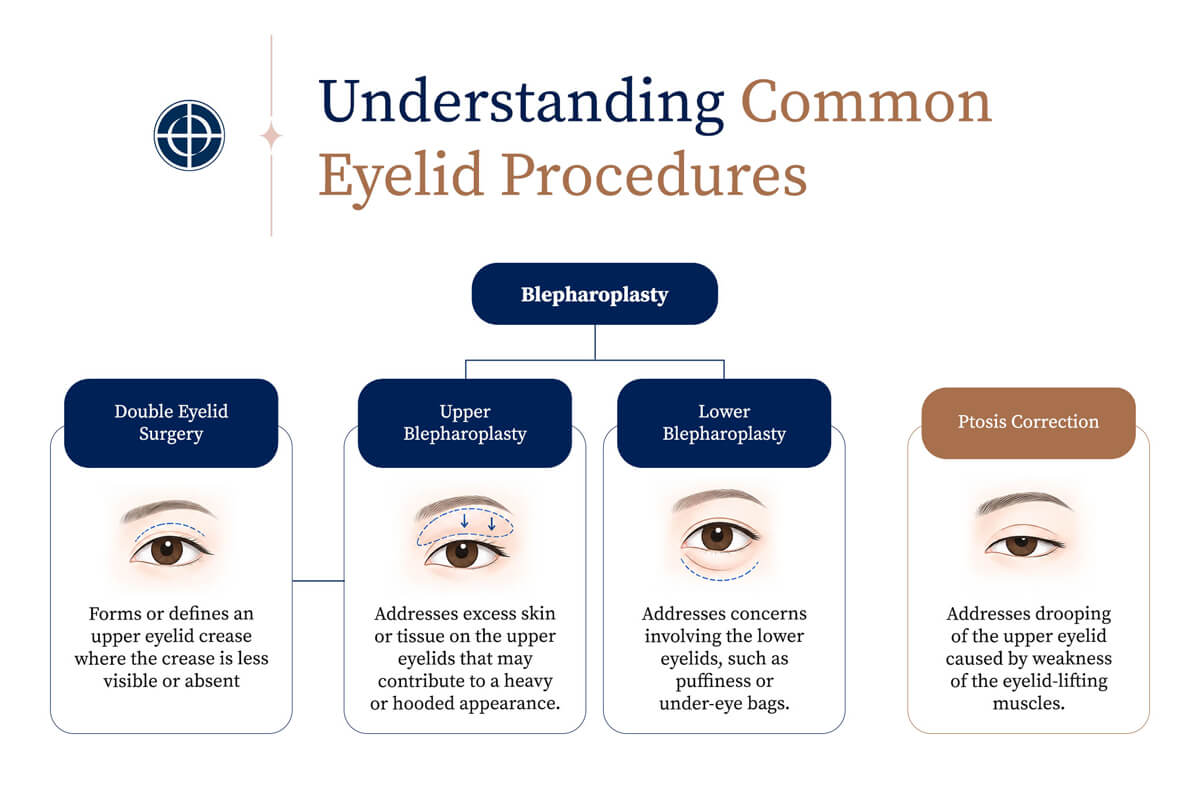
The terms may be understood as follows:
- Double eyelid surgery focuses mainly on creating or refining an upper eyelid crease.
- Upper blepharoplasty is a broader term for upper eyelid surgery. It may involve the removal or repositioning of skin, fat or other tissue and may also include crease creation or refinement.
- Lower blepharoplasty addresses concerns involving the lower eyelids, such as prominent under-eye bags or changes in lower eyelid tissue.
- Ptosis surgery addresses drooping of the upper eyelid caused by weakness or dysfunction of the muscle that lifts the eyelid.
What Is Double Eyelid Surgery?
Double eyelid surgery is an upper eyelid procedure that creates or refines a crease above the eyelid margin. Some people naturally have a visible upper eyelid crease, while others may have a low, less defined or absent crease.
The procedure aims to create a connection between the eyelid skin and the deeper structures that move when the eye opens. This allows a crease to form or become more visible.
When planning double eyelid surgery, the doctor may consider factors such as:
- Crease height
- Crease shape
- Eyelid contour
- Existing asymmetry
- Skin thickness
- Fat distribution
- Eyelid muscle function
Depending on the patient’s anatomy, the procedure may involve:
- A non-incisional technique using sutures
- An incisional technique involving an incision along the planned crease
- Removal or adjustment of a limited amount of skin or fat where appropriate
Because an incisional double eyelid procedure may include tissue adjustment, it can fall within the broader category of upper blepharoplasty. The defining focus, however, remains the creation or refinement of the upper eyelid crease.
What Is Blepharoplasty?
Blepharoplasty is the broader medical term for eyelid surgery. It may be performed on the upper eyelids, lower eyelids or both.
Upper blepharoplasty
Upper blepharoplasty refers to surgery involving the upper eyelid. Depending on the patient’s anatomy and concerns, it may address:
- Excess upper eyelid skin
- Bulging or prominent fat
- Changes in eyelid contour
- A low or uneven defined eyelid crease
- A combination of skin, tissue and crease concerns
Upper blepharoplasty is therefore not limited to tissue removal. In some patients, it may include the creation or refinement of an eyelid crease. When crease formation is the main purpose, the procedure may also be described as double eyelid surgery.
Lower blepharoplasty
Lower blepharoplasty involves the lower eyelids and may address concerns such as:
- Prominent under-eye bags
- Protruding or uneven fat
- Excess lower eyelid skin
- Changes in lower eyelid contour
Double Eyelid Surgery vs Blepharoplasty: Side-by-Side Comparison
The relationship between the terms may be understood by comparing their scope and main areas of focus.
| Category | Double Eyelid Surgery | Blepharoplasty |
| Meaning | An upper eyelid procedure focused mainly on crease creation or refinement | A broad term for surgery involving the upper eyelids, lower eyelids or both |
| Main area addressed | Upper eyelid crease and contour | Upper eyelid, lower eyelid or both |
| Primary focus | Creating, defining or adjusting an upper eyelid crease | Addressing the relevant skin, fat, muscle, tissue or contour concerns |
| Tissue adjustment | May be minimal or may involve skin and fat adjustment, depending on the technique | May involve removal, preservation or repositioning of skin, fat or other tissue |
| Crease formation | The main focus | May be included in upper blepharoplasty but is not part of every blepharoplasty procedure |
| Functional Considerations | Usually discussed in relation to crease formation, although eyelid function must still be assessed | May address functional or anatomical concerns depending on the tissues involved |
| Surgical Approach | Incisional or non-incisional methods | Depends on whether the upper eyelid, lower eyelid or both are being treated |
Can Blepharoplasty Create a Double Eyelid?
Yes, an upper blepharoplasty may include the creation or refinement of an upper eyelid crease.
Whether it does so depends on the purpose and details of the procedure. For example, an upper blepharoplasty performed mainly to remove excess skin may preserve an existing crease.
In another patient, the procedure may combine skin or fat adjustment with the creation or refinement of a crease.
When crease formation is the main focus, the procedure is often referred to as double eyelid surgery. When several upper eyelid concerns are addressed together, it may be described more broadly as upper blepharoplasty.
Who May Consider Double Eyelid Surgery?
Double eyelid surgery may be discussed when a patient’s main concern relates to:
- An absent upper eyelid crease
- A low or less defined crease
- An uneven eyelid crease
- Differences in crease shape or height
- Eyelid contour associated with the crease
During consultation, the doctor may also assess whether excess skin, fat distribution, ptosis or other anatomical factors are contributing to the eyelid appearance.
If other concerns are present, the surgical plan may involve more than crease formation alone.
Who May Discuss Upper or Lower Blepharoplasty?
Upper blepharoplasty may be discussed when concerns involve:
- Excess upper eyelid skin
- A heavy upper eyelid appearance
- Prominent upper eyelid fat
- Changes in the upper eyelid crease (e.g. triple eyelid crease)
- A combination of tissue and crease concerns
Lower blepharoplasty may be discussed for concerns such as:
- Prominent under-eye bags
- Protruding lower eyelid fat
- Excess lower eyelid skin
- Changes in lower eyelid contour
These concerns do not always arise from the same anatomical cause. Doctors typically assess the skin, fat distribution, eyelid muscles, crease position, brow position and overall eyelid function before discussing a surgical approach.
Comparing Recovery between Double Eyelid Surgery and Blepharoplasty
Recovery varies according to the surgical technique, the amount of tissue involved and the patient’s healing response. An incisional procedure involving skin or fat adjustment may have a different recovery pattern from a non-incisional suture procedure.
Recovery after eyelid surgery
Healing after double eyelid surgery or upper/lower blepharoplasty, patients may experience:
- Swelling
- Bruising
- Heaviness and tightness around the eyelids
- Temporary asymmetry caused by swelling
- Temporary changes in sensation
The eyelid crease may initially appear higher or more defined before gradually settling as swelling reduces and the tissues heal.
Can Crease Creation and Tissue Adjustment Be Performed Together?
A patient may have both a crease-related concern and excess skin or fat in the upper eyelid.
In such cases, an upper eyelid procedure may include:
- Creation or refinement of the eyelid crease
- Removal or preservation of selected skin
- Adjustment or repositioning of fat
- Changes to other upper eyelid tissues where clinically indicated
Not every patient requires each of these surgical steps. The approach depends on the patient’s anatomy, clinical findings and treatment objectives.
Questions to Ask During Consultation for Double Eyelid or Blepharoplasty
If you are uncertain about the terminology or the procedure being discussed, questions may include:
- What may be causing my eyelids to look this way?
- What changes would the proposed procedure involve?
- Will my existing eyelid crease be created, preserved or adjusted?
- Will any skin, fat or other tissue need to be removed or repositioned?
- Why is this approach suitable for my eyelid anatomy and concerns?
- What are the possible risks and limitations?
- What does recovery involve?
- Could the procedure affect eyelid closure, eye comfort or vision?
Final Thoughts
Blepharoplasty is a broad term for eyelid surgery and may involve the upper eyelids, lower eyelids or both. Upper blepharoplasty may address skin, fat, other tissues, the upper eyelid crease or a combination of these features.
Double eyelid surgery is more specifically focused on creating or refining an upper eyelid crease. It is not entirely separate from upper blepharoplasty. Instead, it may be considered a type of upper eyelid surgery, and the two terms may overlap depending on what the procedure involves.
To recap, not every upper blepharoplasty creates a double eyelid crease, and not every double eyelid procedure requires extensive removal of upper eyelid tissue.
An eyelid assessment may include the position of the crease, skin and fat distribution, eyelid-lifting muscle function, existing asymmetry and other anatomical factors. These findings help determine whether the concern relates primarily to crease formation, excess tissue, ptosis or a combination of factors.
At Dream Aesthetics & Plastic Surgery, consultations are conducted by A/Prof Vincent Yeow, a board-certified plastic surgeon with more than 20 years of experience in reconstructive and aesthetic surgery. A consultation can be arranged if you would like to learn more.