

If you’re considering getting a double eyelid surgery, it is natural to have questions about the procedure: What will the crease look like? Which surgical technique may be suitable? How long will recovery take?
Having these questions in mind and knowing what to expect will help in your preparation for the procedure. It also gives you an opportunity to discuss your medical history, medications, eye health and expectations with your doctor before a decision is made.
For patients searching for how to prepare for double eyelid surgery, preparation is not simply about what to do the night before. It starts with the consultation and continues through the days leading up to the procedure and the recovery period that follows.
Start With a Consultation
The first step is understanding whether double eyelid surgery is appropriate for you.
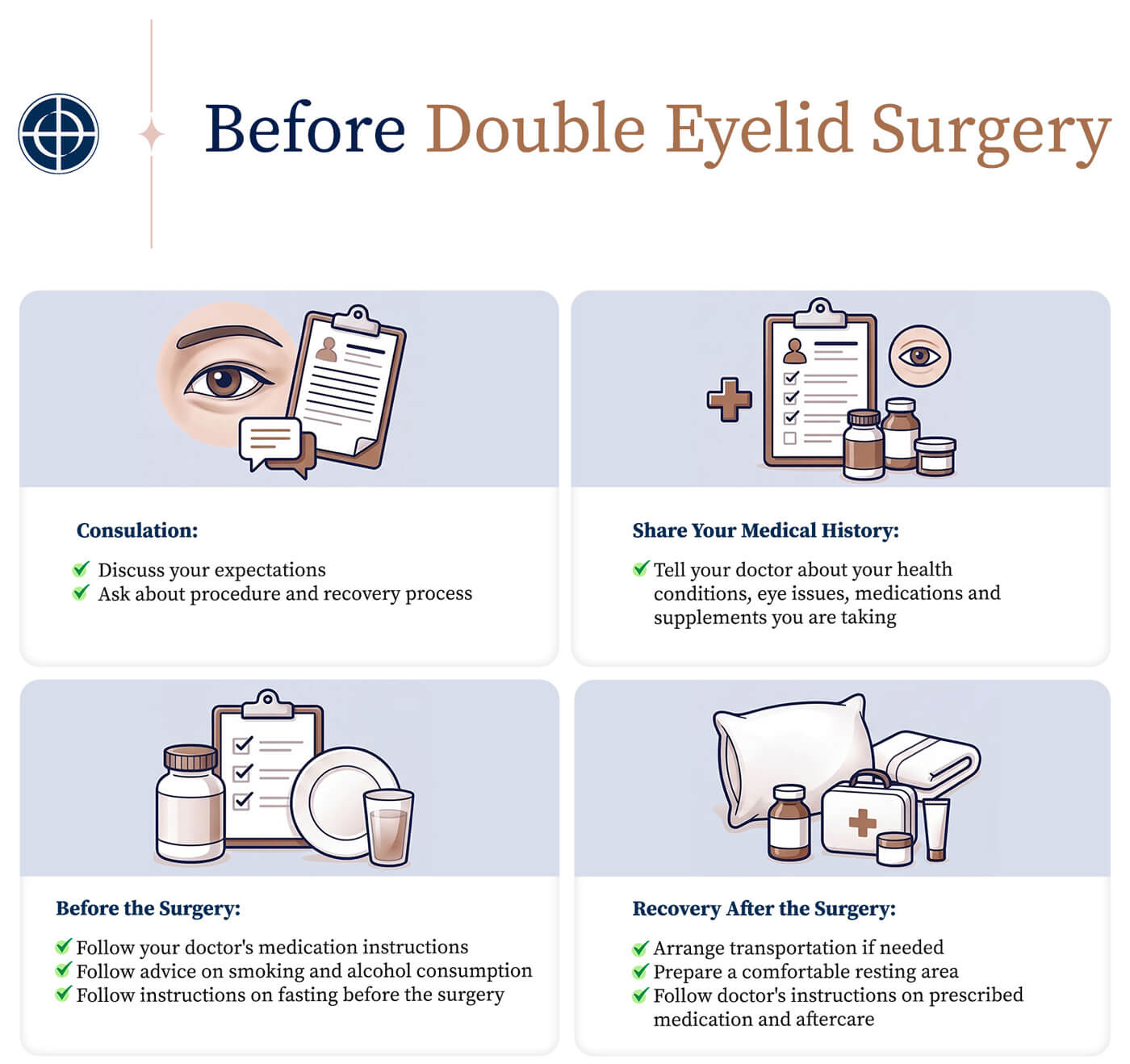
During a consultation, the doctor will assess the eyelids in person and ask about your concerns, medical history and any existing eye-related issues. Skin thickness, the amount and position of fat, eyelid movement and muscle function can all affect the treatment discussion.
This assessment is particularly important because a concern that appears cosmetic may have another underlying cause. For example, some patients who ask for a more defined crease may actually have ptosis, where the muscle that lifts the upper eyelid is weak. Creating a crease alone would not address that underlying issue.
The consultation is also an opportunity to discuss the type of procedure that may be considered, recovery and what can realistically be expected. Preparing a list of questions beforehand can help you make the most of the appointment.
Before booking a consultation, it is also important to check if the medical professional has the necessary licenses and adequate experience to do the assessment and, if deemed appropriate, the procedure itself.
Share Your Medical and Eye History
Your doctor should know about relevant medical conditions, previous eye procedures and any medications or supplements you take before surgery. Ongoing eye symptoms such as dryness or irritation are also worth mentioning during consultation. Your eye health forms part of the overall assessment and may influence the advice given before surgery.
Some medications and supplements may affect bleeding or healing, so your doctor may advise you to stop or adjust certain products before the procedure. Do not stop prescribed medication on your own. Discuss any changes with your doctor first.
Be Clear About Your Expectations
Some patients may want a more visible crease while others may be concerned about asymmetry or changes in the appearance of their eyelids over time. These concerns can lead to different treatment discussions.
It is helpful to speak openly about your expectations rather than assuming that a crease seen on another person will necessarily be suitable for you.
Follow Your Doctor’s Pre-Surgery Instructions
Once your medical history and treatment plan have been reviewed, your doctor will provide specific instructions for preparing for surgery.
These may include advice about medications, supplements, smoking, alcohol, eating and drinking before the procedure. Rather than following a generic online checklist, follow the instructions given to you by your doctor. Advice can vary depending on your medical history and the procedure being performed.
Make Practical Arrangements Before Surgery
A few practical arrangements can make the day of surgery and the first few days afterwards easier to manage.
If your doctor advises that you should have someone accompany you home, arrange this in advance. It is also useful to have your prescribed medication and any recommended aftercare supplies ready before the procedure.
At home, prepare a clean and comfortable place where you can rest with your head elevated. Extra pillows can help you maintain this position while sleeping. If cold compresses have been recommended, have these ready as well.
You do not need to make major changes to your home. The aim is simply to have the things you need within easy reach while you recover.
Know What Recovery May Involve
It is also important to understand that the eyelids may not look settled immediately after surgery.
Swelling, bruising and temporary changes in the appearance of the crease can occur during healing. Recovery varies between patients because factors such as skin thickness, tissue quality and the body’s healing response can influence how the eyelids settle.
The appearance may therefore change as swelling subsides and the tissues heal. This is worth noting if you are concerned about how your eyes look during the first few days or weeks.
If you have concerns during recovery, follow your doctor’s post-operative instructions and attend your scheduled follow-up appointments.
Follow Your Post-Operative Instructions
After surgery, your doctor will provide instructions on caring for the eyelids, using prescribed medication and managing swelling. You may also be advised to avoid certain activities temporarily while the tissues heal.
Keeping your head elevated while sleeping and protecting the eyelid area from excessive sun exposure may also form part of your aftercare instructions.
If you notice increasing pain, worsening asymmetry or signs of infection or delayed healing, contact your doctor for assessment.
Preparation Is About More Than a Checklist
There is no single preparation checklist that applies to every patient.
Your medical history, eye health, eyelid anatomy and the surgical technique being considered all influence the advice you receive. That is why preparation should begin with a consultation.
For someone considering double eyelid surgery in Singapore, it is important to understand why the procedure is being considered, what the doctor has assessed and what recovery may involve. Once those points are clear, practical arrangements can be made according to the instructions provided by your doctor.
Understanding Double Eyelid Surgery
Preparing for double eyelid surgery is not about trying to control every part of the outcome. It is about understanding the procedure, your eyelid anatomy and the recovery process before making a decision.
A consultation allows the doctor to assess your eyelids, review your medical and eye history and discuss which approach may be appropriate. It is also your opportunity to ask questions about the procedure, recovery and any concerns you may have.
Taking the time to prepare can help you approach the procedure with a clearer understanding of what to expect.
At Dream Aesthetics & Plastic Surgery, consultations are conducted by A/Prof. Vincent Yeow, a board-certified plastic surgeon with more than 25 years of experience in reconstructive and aesthetic surgery. A consultation can be arranged if you would like to learn more.